Quitting bad habits does not require superhuman discipline or constant self-control. Discover how reshaping your environment, increasing friction for bad choices, and planning for obstacles can help you create effortless, lasting behavioral change without draining your mental energy.
Setting ambitious goals is easy, but sticking to them is hard. This guide reveals how to stop relying on willpower and start creating sustainable routines. By shrinking habits to two minutes, optimizing your environment, and using clear cues, you can make positive behavioral changes that truly last.
Procrastination isn’t a sign of laziness or poor time management—it is an emotional response to stress, boredom, and fear of failure. When faced with daunting tasks, our brains default to instant relief. By shrinking initial barriers down to two minutes, optimizing our environments, and building small accountability habits, we can overcome avoidance and regain complete control of our work.
Waiting for motivation to strike often leads to frustration and missed opportunities. True progress comes from establishing reliable, automated routines that keep you moving forward even when life becomes stressful or unpredictable. By starting with small actions, designing a friction-free environment, and building deep self-trust, you can create sustainable consistency that lasts.
Most people assume successful people are just naturally charming. They’re not. Behind every thriving career is a deliberate system for managing relationships. This article reveals how high performers choose who gets their energy, use small habits to stay connected, and build real trust—by design, not accident.
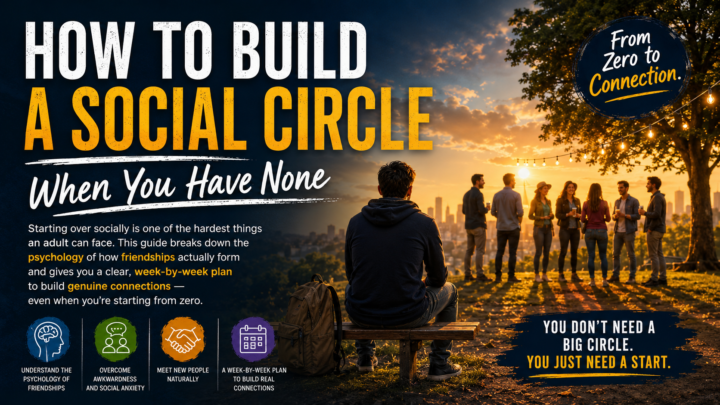
Starting over socially is one of the hardest things an adult can face. This guide breaks down the psychology of how friendships actually form and gives you a clear, week-by-week plan to build genuine connections — even when you’re starting from zero.